
Blogging & SEO · Oct 8, 2026
A Stage-Based Link Building Playbook: Free Outreach Now, Digital PR Later
By ChannelGlance Editorial · Approx. 6 min read
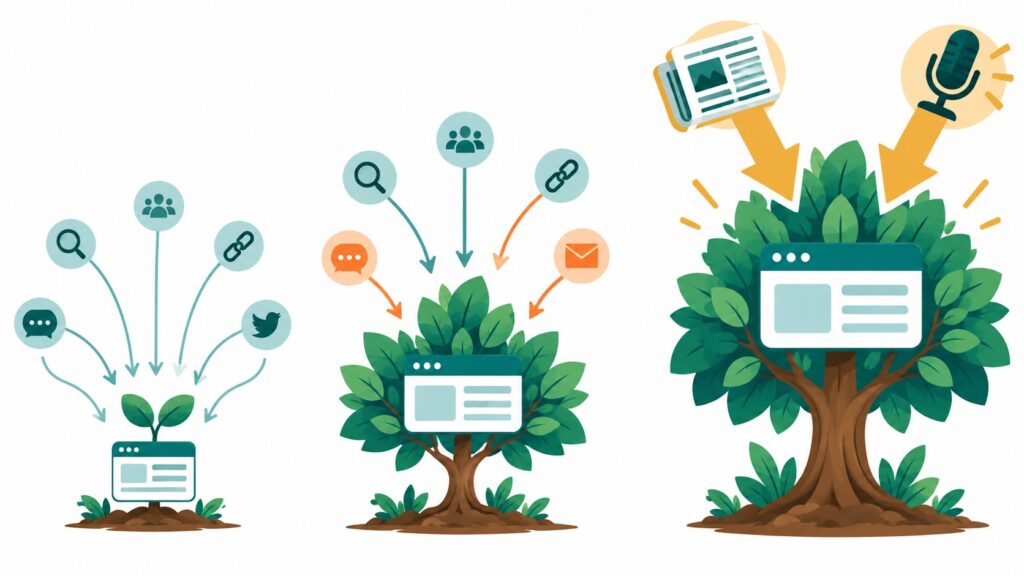
The fastest way to waste link building effort is to run tactics designed for a different stage of site. A link building guide from Semrush splits every tactic into two families, and the split is the useful part. Link producers — email outreach, link reclamation, replicating competitor links, resource pages, and broken link building — are accessible and volume-oriented, which makes them the natural starting point for new or low-authority sites. Association producers — linkable assets, digital PR, journalist sourcing, guest blogging done properly, and partner links — cost far more effort per win but build the brand associations search engines and AI systems draw on when they decide whom to rank, mention, and cite. Choose the family that matches your site’s age, authority, and resources, and a long list of possible link building tactics turns into an actual plan.
Two Families of Tactics, Two Different Jobs
Link producers share one trait: almost anyone can attempt them today, at little or no cost per attempt. The family includes:
- Email outreach: short pitches asking a relevant site to link to a specific page.
- Link reclamation: finding lost or unlinked mentions of your site and asking for the link back.
- Competitor link replication: researching who links to rivals and pursuing similar placements.
- Resource pages: getting listed on curated pages that exist to collect helpful links.
- Broken link building: replacing dead links on other sites with your working page.
Association producers work differently. Each one takes real investment — original research, a useful tool, a relationship with a journalist or partner — and the payoff is not just the link. It is the set of brand associations that form when authoritative sources repeatedly connect your name with a topic. Those associations increasingly matter beyond traditional rankings, because the AI systems deciding whom to mention and cite draw on the same signals.
Match Your Tactic Mix to Your Site’s Stage
The stage guidance is simple enough to plan a quarter around:
- New or low-authority sites: focus almost entirely on link producers. Volume tactics are cheap, teach you how outreach actually works, and help a young domain get discovered.
- Sites with some authority but limited time or cash: blend both families. Keep the free volume tactics running while you invest in one or two association plays.
- High-authority sites with real resources: focus on association producers. Additional volume links move little; digital PR, linkable assets, and partner co-citations compound what you already have.
Start With Competitor Link Research
Before any outreach, learn what actually earns links in your niche. A backlink analysis tool answers two questions: which sites link to your competitors, and which of your competitors’ pages attract the most links from unique domains. Unique domains matter more than raw link counts, because a cluster of links from one site signals far less than the same number of links spread across many sites.
- List three to five real competitors — sites that rank for your target topics, not just ones that sell the same thing.
- Pull their referring domains and identify the pages with the most unique-domain links.
- Study what those linked pages share: format, depth, original data, or a built-in tool.
Use the results as inspiration, not a copy plan. The guide’s caveat is worth taking seriously: sites already linking to your competitors may have no interest in linking to you, so treat competitor profiles as a map of what your niche rewards rather than a prospect list you are owed.
Find Resource Pages for Free With Google Search Operators
Resource pages are curated lists of helpful links, and the people who maintain them have a real incentive to keep those lists useful. That is the search intent behind this tactic: you are not asking for a favor, you are offering a resource their readers want. You can find candidates with nothing but Google:
- Your topic plus inurl:resources — for example, composting inurl:resources.
- Your topic plus intitle:resources.
- Your topic plus the quoted phrase “helpful resources”.
Prioritize pages that were updated recently, because a maintained page means someone still reads the contact address. Then send a short, specific pitch: name the page, name the resource you are suggesting, and give one sentence on why it fits their list. Vague “please link to my site” emails fail because they ignore the purpose the page serves.
Replace Links on Competitor 404 Pages
Broken link building starts from a competitor’s dead pages. When a competitor deletes or moves a page, every site that linked to it now points at a 404. Find those URLs through a backlink tool, confirm that links still point at them, and offer your page as a direct replacement.
Keep two rules in mind. First, your replacement page must genuinely cover the same ground — a closely matched resource gets accepted; a homepage pitch does not. Second, calibrate expectations. The guide is candid that broken link building has a modest success rate, so treat it as a numbers game that runs alongside resource-page outreach, not as a primary strategy on its own.
Shift Effort Toward Linkable Assets
A linkable asset is a page people link to because it is useful, not because you asked. Tools, data studies, and definitive guides can keep earning links months and years after publication, which no outreach email can match.
The examples the guide points to are deliberately unglamorous: a compound interest calculator and a statistics page. Neither required a newsroom or a large budget. Each answered a repeated need so well that writers linked to it instead of rebuilding the work. If you are moving from volume tactics toward association tactics, start by asking what your audience looks up, calculates, or cites over and over — then build the free version of that.
Use Digital PR Once You Have Something Worth Covering
Digital PR earns links from news outlets and high-authority publishers, and it rests on three foundations: original research, a newsworthy take on existing data, or a genuinely creative concept. Campaign examples cited in the guide include an analysis of AI tools, a lifetime tax study, and a hedgehog holiday park. The formats differ, but the principle is the same: give a journalist a story their editor will accept.
This is where stage matters most. Original research costs time and money, and a brand-new site has little standing to be the source. A site with existing authority gets taken seriously, so the same campaign becomes easier to land as you grow.
Understand What Partner Links Actually Pass
Partner pages and directories are the weakest association tactic in ranking terms — the guide notes they pass little ranking authority. What they do create is co-citation: your brand appearing alongside the same related names again and again. That pattern signals the category you belong in and the peers you keep, which supports the brand-level signals that association producers exist to build. Accept partner links for what they are, and do not count them as link building wins.
Measure the Right Numbers
Whatever mix you run, track unique linking domains rather than total links, and separate one-off outreach wins from assets that keep earning links on their own. A single statistics page that attracts a steady trickle of new referring domains each month beats a pile of one-off placements that stop the day you stop emailing. Review the mix each quarter: as your authority grows, shift hours away from volume outreach and toward the assets and PR campaigns that only an established site can justify.
Frequently asked questions
What is the difference between link producers and association producers?
Link producers are accessible, volume-oriented tactics such as email outreach, link reclamation, competitor link replication, resource pages, and broken link building. Association producers are effort-intensive tactics such as linkable assets, digital PR, journalist sourcing, guest blogging done properly, and partner links, which build the brand associations search engines and AI systems use when deciding whom to rank, mention, and cite.
Which link building tactics should a brand-new website start with?
Start with link producers. Free or low-cost options include resource-page outreach found through Google search operators, broken-link replacement on competitor 404 pages, and replicating links that competitors have already earned.
How do you find resource pages without paying for tools?
Use Google search operators such as your topic plus inurl:resources, your topic plus intitle:resources, or your topic plus the quoted phrase helpful resources. Prioritize recently updated pages and send a short, specific pitch explaining why your resource fits their list.
Is broken link building still worth doing?
Yes, but with realistic expectations. The guide notes a modest success rate, so treat it as a numbers game that runs alongside other tactics, and make sure your replacement page genuinely covers the same topic as the dead link.
Do partner and directory links help SEO?
They pass little direct ranking authority, but they create co-citations — your brand appearing alongside related names signals the category you belong in and the peers you keep, which supports broader brand-level signals.