
Ecommerce · Oct 9, 2026
Skullcandy's Black Friday Marketing Strategy: Building Demand With TikTok Shop Creators
By ChannelGlance Editorial · Approx. 6 min read
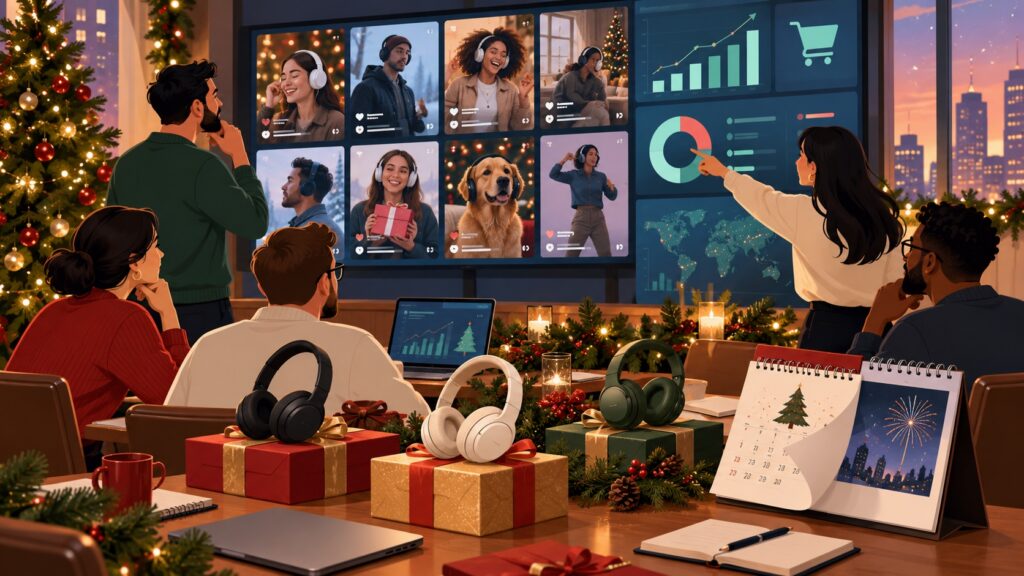
Skullcandy builds Black Friday demand by investing media well before the day itself and by keeping a high velocity of TikTok Shop creators active around its $279 headphones, so that Black Friday becomes a harvest of demand already created rather than a push for incremental last-minute spend. That is the Q4 approach described by Evan Catlett, VP of global marketing at Skullcandy, in a Commerce Playbook interview from Common Thread Collective recorded at Commerce Roundtable in San Diego. For a brand that spent more than two decades in big-box retail before rebuilding its digital engine, the plan pairs creator-led demand creation on TikTok Shop with a national promo calendar that stays consistent across every channel. It also does not end on December 25: some of Skullcandy’s largest sales days land in the post-Christmas gift-card and buyer’s-remorse window, so Q4 planning runs through the end of the year.
The 2023 Reset: From Channel-First to Consumer-First
Skullcandy is a 23-year-old brand with a retail-first history. Its distribution runs through Walmart, airport stores, and surf shops, which produced broad awareness but an underdeveloped digital footprint. A CEO change in 2023 made growing direct-to-consumer revenue a core turnaround initiative, and the marketing team shifted from channel-first thinking to consumer-first thinking.
The distinction matters for any ecommerce business weighing a similar move. Channel-first planning asks what each channel needs; consumer-first planning asks what the shopper needs and then decides which channels carry the message. For Skullcandy, that reframing opened the door to treating TikTok Shop as a serious demand channel for a considered purchase rather than a discount outlet.
Scaling Creator Velocity for a $279 Product
When Skullcandy launched on TikTok Shop, expectations were low. Catlett was candid that shoppers do not impulse-buy $279 headphones from a single piece of content, and the channel started slowly. The unlock was creator velocity: dramatically increasing the number of creators posting and the frequency of their posts, while reusing the content they produced. Once that scaled, the platform took off in Q4 last year.
The reasoning generalizes to other high-AOV products. One video can introduce a product, but a considered purchase usually needs repeated exposure across familiar faces before a buyer converts. Many creators posting steadily builds that repetition in a way a single sponsored post cannot, and reused creator content extends the same assets into paid and owned placements without new production cost.
Demand Creation With a Retail Halo
On paper, TikTok Shop now performs two jobs for Skullcandy. Its gross merchandise value is strong and a core part of DTC revenue. But Catlett pointed to a second effect that is harder to pin down: when the brand launches a creator campaign for a specific product, that SKU tends to move at retail within weeks. She described measuring this halo as a struggle, so it should be read as an attributed observation from one brand rather than proven attribution.
For omnichannel sellers, the implication is about how you judge a channel. If TikTok Shop only gets credit for transactions completed in-app, its contribution looks smaller than the demand it may be creating at Walmart or on marketplaces. The honest position Skullcandy models here is to track the correlation, acknowledge the measurement gap, and keep investing while the pattern holds.
One National Promo Plan Across Every Channel
Skullcandy’s Q4 runs on a national promo plan that keeps offers and content consistent across channels. The same deal appears wherever the shopper looks, and creators push deals because, in Catlett’s experience, deals convert.
Consistency serves a practical purpose for teams planning their own Black Friday marketing strategy. A single national offer simplifies creator briefs, keeps paid media and site merchandising aligned, and removes the confusion that comes when a shopper finds a different discount on each surface. When creators are the delivery mechanism, a clean offer is also easier to explain in a short video than a layered promotion full of conditions.
Planning Past December 25: Gift Cards and Buyer’s Remorse
Some of Skullcandy’s largest sales days come after Christmas, driven by gift-card redemption and what the team calls buyer’s-remorse days, when shoppers swap gifts they did not want. Because of that, the brand plans to sustain volume through year-end instead of peaking at Black Friday and coasting. Q4 merchandising also includes limited-edition products by channel and a new Session speaker line.
The lesson here is calendar discipline. Post-Christmas demand is predictable in shape, even if its size varies year to year, so inventory, creative, and promo mechanics need to stay warm after December 25 rather than shutting down with the holiday campaign.
Invest Early: Black Friday Is for Harvesting
Catlett’s view on Black Friday media is that day-of spend is not incremental. Her position is to invest ahead of time and let the day itself be harvesting, ideally through non-paid conversions.
The logic follows from how holiday buyers behave. By Black Friday, most shoppers have seen the products they want, compared offers, and formed intent. Media spent in the weeks before the day builds familiarity, retargeting pools, and search demand that pay off on the day itself; heavy incremental spend on the day mostly competes for demand that already exists. For store owners, the practical version is a pre-Black Friday ramp in spend and creator activity, with a target of seeing a rising share of non-paid conversions as the day arrives.
Where the Plan Expands Next: CTV and Amazon Retail Media
Two expansions round out the picture. Skullcandy is pushing into connected TV with incrementality testing, and it is deepening its Amazon retail media work. Both moves extend the same theme: reach shoppers where attention sits, then measure honestly whether the spend created demand that would not have happened anyway. Incrementality testing on CTV is the natural answer to the same measurement gap that makes TikTok Shop’s retail halo hard to quantify.
A Q4 Checklist From the Skullcandy Playbook
Readers running an ecommerce business can translate the approach into a working sequence:
- Set one national offer per promo period and hold it consistent across DTC, marketplaces, and creator briefs.
- Scale creator velocity, meaning more creators posting more often, rather than betting on a single viral video for a considered purchase.
- Reuse creator content across paid and owned placements to extend the investment.
- Brief creators on the deal itself, since clear deals convert in short-form video.
- Front-load media before Black Friday and treat the day as harvest, watching the share of non-paid conversions.
- Keep inventory, creative, and promo plans live through the post-Christmas gift-card and buyer’s-remorse window.
- Where direct attribution fails, run incrementality tests rather than assuming the channel did or did not work.
None of this guarantees outcomes, and Catlett’s comments stay strategic rather than tactical. What the Skullcandy example offers is a coherent sequencing decision: create demand early through creators, keep the offer identical everywhere, harvest on the peak days, and keep selling after Christmas. The source interview on Common Thread Collective’s channel carries the full discussion for readers who want the strategic context in the speaker’s own words.
Frequently asked questions
Why does Skullcandy scale creator velocity on TikTok Shop?
Because a $279 headphone is a considered purchase that shoppers rarely buy from one video. Evan Catlett said TikTok Shop started slow until the brand dramatically increased the number and frequency of creators and reused their content, after which the platform took off in Q4 last year.
Does TikTok Shop demand affect Skullcandy's retail sales?
Possibly, but it is hard to prove. Catlett observed that when a creator campaign launches for a specific product, that SKU tends to move at retail within weeks, while noting that measuring this halo effect remains a struggle for the team.
How does Skullcandy approach Black Friday media spend?
Catlett's view is that day-of Black Friday spend is not incremental. She invests media ahead of time and treats the day itself as harvesting, ideally through non-paid conversions from demand already created.
Why does Skullcandy plan for sales after Christmas?
Some of its largest sales days come after Christmas, driven by gift-card redemption and buyer's-remorse swaps, so the brand plans to sustain volume through the end of the year instead of peaking at Black Friday.
How does Skullcandy keep promotions consistent across channels?
It runs one national promo plan so offers and content stay the same across every channel, and it briefs creators on the deal itself because deals convert in short-form video.